
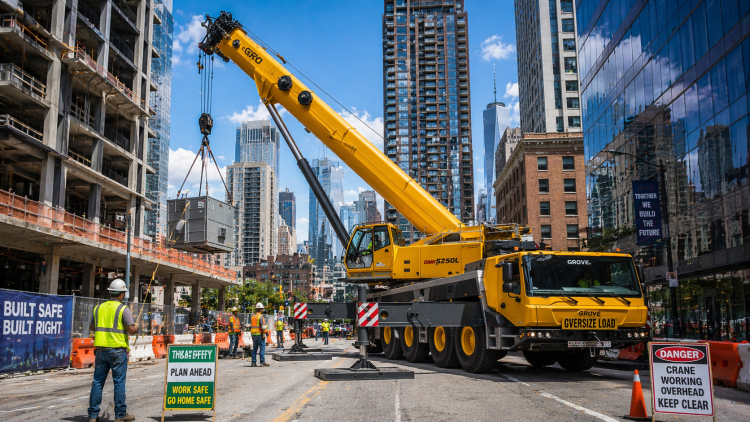
Choosing the wrong crane on a multi-story steel job doesn’t just slow things down. It can shut the whole site down for a day, push your schedule back a week, and put your crew at risk. Steel erection leaves almost no room for guesswork, and the crane you bring in has to match the load, the height, the site, and the timeline all at once.
If you’ve ever stood on a job site watching a crane strain to make a lift it wasn’t really built for, you already know how this goes wrong. This guide breaks down what actually matters when you’re selecting a building construction crane for structural steel work, so you can make the call before the truck shows up instead of after.
Why Crane Selection Makes or Breaks Multi-Story Steel Erection
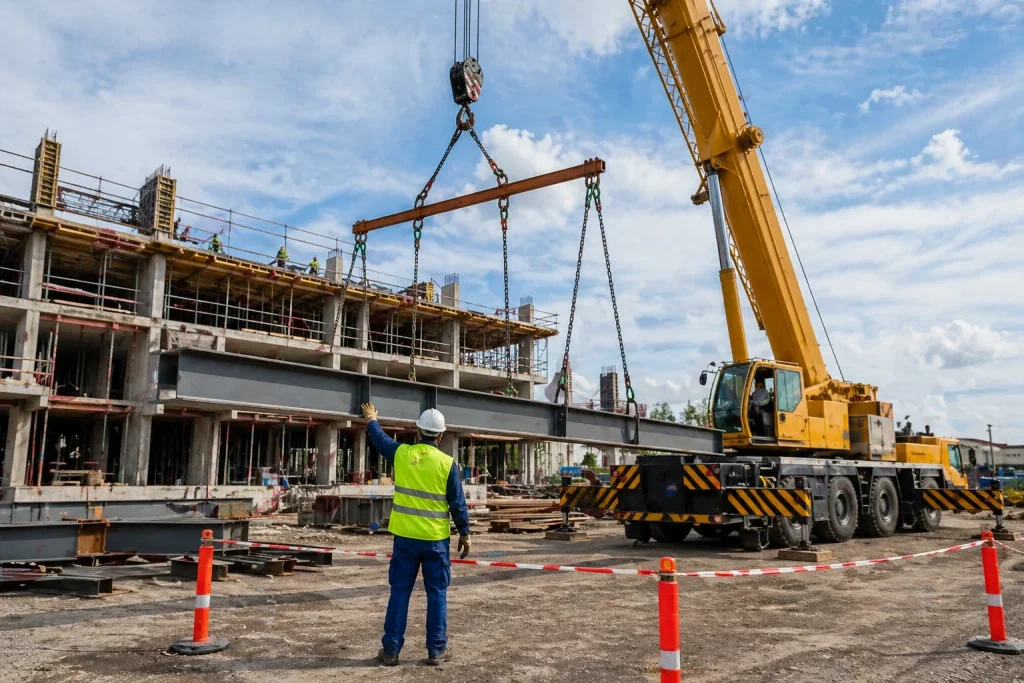
Steel erection is unlike most other lifts on a construction site. You’re not moving a single piece of equipment into place once. You’re making dozens, sometimes hundreds, of coordinated lifts over the course of weeks, often at increasing heights as the structure rises floor by floor.
A crane that handles the ground floor columns just fine might not have the reach or capacity once you’re setting beams on the eighth floor. That’s why picking a building construction crane for a multi-story project isn’t a one-time decision. It’s a planning exercise that has to account for how the job changes as the building goes up.
Get it right and your crew sets steel on schedule, floor after floor, without delays. Get it wrong and you’re paying for downtime, re-rigging, or worse, a crane that simply can’t make the lift when you need it to.
Understand the Load Before You Choose a Crane
Every crane decision starts with the load chart, not the crane brochure. Before you can pick equipment, you need real numbers on:
- The weight of the heaviest steel member you’ll lift, not the average
- The radius at which that lift happens (how far the load sits from the crane’s center)
- The height at which the load needs to land
- Rigging weight, since slings, shackles, and spreader bars all count against capacity
A common mistake is sizing a crane off the tonnage rating alone. A 100-ton crane doesn’t lift 100 tons at every boom angle and radius. Capacity drops sharply as boom length and radius increase, which matters enormously on a multi-story building where the crane may need to reach over an existing structure or around site obstructions.
For structural steel work, your crane rental company should be running actual load charts against your steel package, not eyeballing it. If a supplier can’t walk you through the numbers for your heaviest and most awkward lifts, that’s a red flag before you sign anything.
Mobile Cranes vs Tower Cranes for Steel Erection
This is usually the first real fork in the road for multi-story steel projects.
Mobile cranes (truck-mounted or all-terrain) are the workhorse for most steel erection under roughly 10 to 15 stories, especially when the building footprint allows the crane to reposition as the structure rises. They mobilize fast, don’t require a permanent foundation, and can be scaled up or down in tonnage depending on the phase of the job. For projects where the steel package is delivered in stages and the crane needs to move around the site, a mobile unit in the 30 to 500 ton range covers the vast majority of commercial and industrial steel jobs.
Tower cranes make more sense once you’re building tall enough, or dense enough, that a mobile crane can’t get the reach or height without repositioning constantly. They stay fixed in one spot for the duration of the project, which is efficient for very tall builds but comes with a longer setup time, permitting requirements, and a fixed location that has to be planned before the foundation is even poured.
For most contractors handling multi-story steel in the 3 to 12 story range, a mobile crane sized correctly for the job is the more practical and cost-effective choice. Tower cranes earn their keep on taller, longer-duration builds where repositioning a mobile crane would eat into the schedule.
Site Access and Ground Conditions Change Everything
A crane that’s perfect on paper can be useless if it can’t get onto the site or set up safely once it’s there. Before locking in a building construction crane, walk through:
- Access roads and gates. Can the crane and its counterweights physically reach the setup position?
- Ground bearing capacity. Soft soil, recent excavation, or buried utilities can all limit where a crane can safely set outriggers, and cribbing or mats may be required.
- Overhead obstructions. Power lines, adjacent structures, and other cranes on tight urban sites all restrict boom angles and swing paths.
- Setup footprint. Outrigger spread on larger cranes can require more clear space than people expect, especially on downtown lots with property lines close to the building.
This is where working with a crane rental company that handles urban and tight-access sites regularly pays off. Pittsburgh job sites in particular often involve narrow streets, sloped lots, and limited staging area, all of which affect which crane can actually do the job, not just which crane has the right tonnage.
Height, Reach and the Real Meaning of “Multi-Story”
Contractors often think about crane selection in terms of tonnage first and height second, but for steel erection, height and radius drive the decision just as much as load weight.
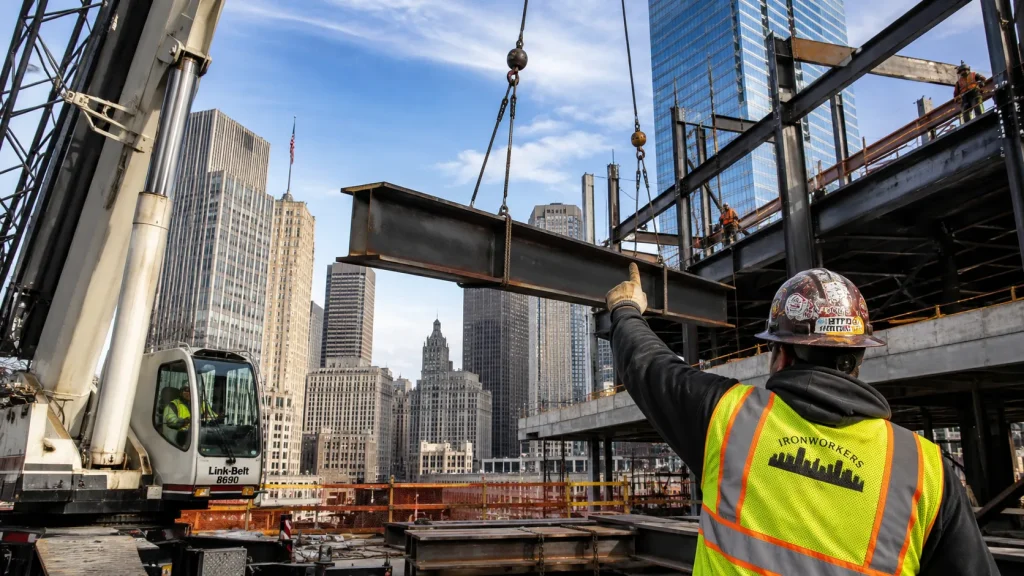
As a building rises, the crane needs enough boom length to reach the top of the structure while still maintaining capacity at that height and radius. This is where a crane that looked oversized for the ground floor work suddenly becomes the right call once you’re setting steel on the fifth or sixth level.
A good rule of thumb: plan your crane selection around the hardest lift of the entire project, not the average lift. If the crane can handle the heaviest beam at the furthest radius and greatest height your project will require, everything below that is straightforward. If you size the crane for the easy lifts and hope it stretches to cover the hard ones later, you’re setting up for a mid-project scramble to bring in a bigger unit.
Timeline Pressure and Crane Availability
Steel erection schedules are usually tight, and delays compound fast. If structural steel arrives and the crane isn’t sized, staffed, or available to keep pace with deliveries, you end up paying for idle steel, idle crews, or both.
This is why availability matters as much as capability. A 24/7 crane rental partner that can respond to schedule shifts, weather delays, or an accelerated delivery timeline keeps your project moving instead of waiting on equipment. Multi-story steel jobs rarely go exactly as planned, and the crane company you choose should be able to flex with the schedule, not just show up for the original date on the contract.
Certified Operators and Rigging Expertise Matter as Much as the Crane
The crane is only half the equation. Structural steel lifts require operators and riggers who understand the specific challenges of steel erection: tag lines, connection sequencing, working at height, and coordinating with ironworkers making the actual connections.
An operator experienced in general construction lifts isn’t automatically prepared for steel erection, where timing and precision matter more than almost any other type of lift. When you’re evaluating a building construction crane rental, ask directly about the operator’s experience with structural steel specifically, not just crane hours in general.
Common Mistakes Contractors Make When Choosing a Crane
A few patterns show up again and again on steel projects that run into crane-related delays:
- Sizing the crane off average lifts instead of the hardest lift on the job
- Underestimating ground conditions, especially on sites with recent grading or unknown subsurface work
- Booking a crane without confirming rigging and operator experience specific to steel erection
- Not planning for repositioning on projects where the crane will need to move as the structure rises
- Locking in equipment before the full steel package and sequence are finalized
Most of these come down to bringing the crane rental company into the planning conversation too late. The earlier a supplier sees your steel package, site plan, and schedule, the more accurately they can match equipment to the job.
Questions to Ask Your Crane Rental Company Before You Book
Before committing to a building construction crane for a multi-story steel project, it’s worth asking:
- Have you reviewed the load chart for our heaviest and furthest-radius lifts?
- What’s your plan for site access and ground conditions specific to our location?
- Will the crane need to reposition as the structure rises, and how is that handled?
- Are the assigned operators experienced specifically with structural steel erection?
- What’s your availability if our schedule shifts due to weather or delivery delays?
A rental company that can answer these clearly, with real numbers instead of general reassurances, is one that understands what multi-story steel erection actually demands.
Get the Right Crane for Your Steel Project From the Start
Choosing a building construction crane for a multi-story steel project comes down to matching real load data, site conditions, and timeline needs to the right equipment and the right crew, not just picking the biggest crane available. Get the planning right up front and steel erection moves the way it should: floor by floor, on schedule, without surprises.
If you’re planning a steel erection project in Pittsburgh or the surrounding area, explore our steel erection crane services for certified operators, a 30 to 500 ton fleet, and full site logistics support, or call us directly at (877) 856-9686 to talk through your project’s load requirements and timeline before you book.
