
Renting a bucket truck isn’t like picking up a sedan from Enterprise. Get it wrong, and you’re looking at project delays, safety violations, blown budgets, or worse—someone getting hurt. Professional contractors know that the real work starts before you ever sign the rental agreement.
Whether you’re an HVAC contractor lifting a rooftop unit, a sign company installing new LED boards, or an electrical crew working on overhead lines, choosing the right bucket truck for rental means doing your homework. This checklist covers everything experienced operators examine before committing to a rental, from equipment specifications to contract fine print that could cost you thousands.
Understanding Your Project Requirements First
Before you start shopping for a bucket truck for rental, nail down exactly what your job demands. Seasoned pros don’t call rental companies asking “what do you have available?” They show up with specifications.
Working Height vs Platform Height
Here’s where rookies mess up. A 40-foot working height means your bucket reaches 40 feet, but the platform itself sits lower. Factor in the height of an average worker (call it 6 feet) plus tool reach. If you need to work at 40 feet, you’re looking at a 45-50 foot platform height minimum. This miscalculation alone causes more rental returns than any other issue.
Weight Capacity Reality Check
Platform capacity ratings aren’t suggestions. A standard single-person bucket handles 300-350 pounds. That’s one worker, tools, and materials combined. Two-person buckets max out around 750 pounds. Do the math before you load up:
- Average worker with gear: 200-250 lbs
- Tool bag: 30-50 lbs
- Extension ladder: 40-75 lbs
- HVAC unit or equipment: varies wildly
If you’re pushing capacity limits, you need the next size up. Period.
Site Access and Terrain Assessment
Walk your jobsite before selecting equipment. Measure gate widths, overhead clearances, and ground conditions. Soft soil, slopes exceeding 5 degrees, and underground utilities all impact which bucket truck for rental will work. An articulating boom navigates obstacles better than a telescopic boom but costs more. Know which you actually need.
The Equipment Inspection Protocol
The rental company says the truck is ready. Great. You’re still inspecting it yourself. Here’s what professionals check before accepting delivery.
Structural Components
Boom and Hydraulic Systems
Examine the boom for visible damage—cracks, welds that look fresh or suspicious, rust spots that suggest structural weakness. Hydraulic lines should be intact without leaks, bulges, or excessive wear. Request service records. If they can’t produce recent hydraulic system maintenance documentation, walk away.
Cycle the boom through its full range of motion. It should move smoothly without jerking, strange noises, or hesitation. Any grinding, squealing, or hydraulic whine indicates problems you don’t want to inherit.
Outriggers and Stabilization
Extend and retract all outriggers. They should deploy evenly and lock securely. Check for hydraulic leaks around the cylinders. Inspect the outrigger pads—damaged or worn pads compromise stability, which compromises everything. Ask if outrigger mats are included. On soft ground, they’re mandatory, not optional.
The Bucket Platform
Step into the bucket and inspect it like your life depends on it—because it does. Look for:
- Cracks or damage to the fiberglass or metal
- Secure door latches that actually latch
- Properly functioning gate springs
- No missing or damaged floor grating
- Clean, visible load capacity placards
The control panel inside the bucket should have clearly labeled, responsive controls. Test every switch and lever before you accept the equipment.
Electrical and Control Systems
Run through both ground controls and platform controls. OSHA requires both sets to function properly. The ground controls should override platform controls in emergency situations. If they don’t, that’s a failed inspection.
Check all safety lights, warning beacons, and horn functionality. These aren’t cosmetic—they’re required safety equipment. Verify the hour meter reading and compare it to what’s listed in the rental agreement.
Vehicle Base and Mobility
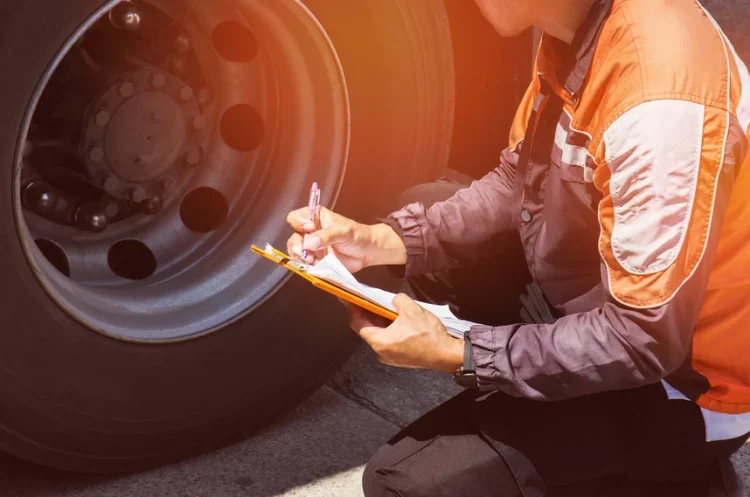
Even if you’re getting a stationary setup, inspect the truck itself. Tires should show adequate tread without visible damage. Brakes, steering, and all vehicle lights need to work properly. If you’re responsible for moving the unit, you’re responsible for DOT compliance.
Safety Equipment and Compliance Verification
This section separates professionals from amateurs. Safety isn’t negotiable.
Fall Protection Requirements
OSHA mandates fall protection for anyone working at heights above 4 feet from bucket trucks. The rental should include:
- Body harness (full-body, not a belt)
- Lanyard with shock absorber
- Proper attachment points inside the bucket
Inspect every piece of fall protection equipment before use. Check for cuts, burns, fraying, or damage to webbing and hardware. If manufacturing dates are older than the manufacturer’s recommended service life (typically 5 years for unused equipment, less for used), reject it.
Required Documentation and Certifications
ANSI and DOT Inspection Certificates
Every bucket truck for rental needs current ANSI A92.2 inspection certification. This inspection should be documented and dated within the past year. Many states also require DOT inspection stickers. These aren’t bureaucratic nonsense—they verify that qualified technicians have examined critical safety systems.
Ask to see the inspection reports, not just stickers. Professional rental companies keep detailed maintenance logs. If they’re hesitant to share documentation, rent elsewhere.
Operator Manuals and Load Charts
The operator’s manual should be in the truck, not filed away at the rental office. You need immediate access to load charts, emergency procedures, and equipment specifications. Missing or illegible load charts are a compliance violation and a legitimate reason to refuse equipment.
Emergency Equipment
Confirm the presence of:
- Fire extinguisher (proper rating and current inspection tag)
- First aid kit
- Emergency lowering procedure instructions clearly posted
- Ground fault circuit interrupter (GFCI) protection if electrical work is involved
Operator Qualifications and Training
Here’s an uncomfortable truth: renting a bucket truck for rental doesn’t automatically qualify you to operate it. OSHA requires operator training, and that requirement doesn’t disappear just because you’re renting.
Training and Certification Requirements
Under OSHA regulations 1910.67 and related standards, anyone operating a bucket truck needs:
- Classroom or formal training on equipment operation
- Hands-on training under supervision
- Evaluation by a qualified person
- Training specific to the type of equipment being operated
Don’t assume your experience with one bucket truck transfers to all models. Articulating booms, overcenter designs, and different control systems require specific training. Many rental companies offer orientation sessions—take them seriously.
Evaluating Rental Company Training Support
Ask potential rental companies:
- Do they provide operator training or orientation?
- Can they document that their equipment meets training requirements?
- Do they have certified trainers available?
- What’s included in the rental regarding operator support?
Quality rental companies don’t just hand over keys and wish you luck. They ensure you understand their specific equipment and have documentation to prove compliance.
Contract Terms That Actually Matter
You’ve inspected the equipment and verified everything works. Now comes the paperwork that determines whether this rental saves money or becomes a financial nightmare.
Insurance and Liability Coverage
Required Insurance Types
Standard bucket truck rental agreements require multiple insurance types:
- Commercial auto liability (often $1-2 million minimum)
- General liability coverage
- Property damage coverage equal to equipment value
Expect to provide certificates of insurance before taking possession. The rental company should be listed as an additional insured. If you’re a small contractor without the required coverage limits, factor insurance costs into your rental budget—they’re substantial.
Damage Waiver Options
Rental companies offer damage waivers, typically 10-15% of the rental cost. These limit your financial exposure if something happens to the equipment. Read the exclusions carefully. Most damage waivers don’t cover:
- Negligence or operator error
- Rollover or tip-over incidents
- Damage while transported
- Vandalism or theft
- Damage to the bucket from contact with structures
Calculate the real cost of declining the waiver. A minor hydraulic line repair can run $1,500-3,000. Boom damage from overhead contact? Try $15,000-50,000. Sometimes the waiver is cheap insurance.
Maintenance and Repair Responsibilities
Who Fixes What, and Who Pays
This is where contracts get contentious. Typical rental agreements specify:
Rental Company Responsibilities:
- Pre-rental maintenance and inspections
- Repairs from normal wear and tear
- Replacement if equipment fails due to mechanical issues
- Scheduled maintenance during long-term rentals
Renter Responsibilities:
- Daily pre-operation inspections
- Fluid level checks and minor maintenance
- Damage from misuse or negligence
- Contaminated fuel or hydraulic systems
Get absolute clarity on these terms. “Normal wear and tear” is subjective. Define it in writing. If the boom hose fails on day three of a weekly rental, who’s paying for repairs and lost project time? Pin this down before signing.
Hidden Costs and Fee Structures
What the Base Rate Doesn’t Include
Base rental rates look attractive until you add:
- Delivery and pickup fees (often $150-500+ depending on distance)
- Environmental fees
- Damage inspection fees
- Late return penalties (frequently 150% of daily rate)
- Cleaning fees if returned dirty
- Excess mileage charges
- Fuel costs and refueling fees
Get everything in writing. Some companies charge separately for outrigger pads, fall protection equipment, or training materials. Others include these items. Compare total costs, not just hourly or daily rates.
Rental Period Flexibility
Early Returns and Extensions
Life happens. Projects finish early or run over. Understand the rental company’s policies:
- Early return refunds (many companies offer none)
- Extension availability and notice requirements
- Overtime or weekend rates
- Minimum rental periods
Lock in extension terms before signing. Some companies allow flexible extensions at prorated rates. Others require full additional rental periods regardless of how much extra time you need.
Red Flags That Should End the Rental Discussion
Experienced contractors know when to walk away. These warning signs indicate problems ahead:
Equipment Red Flags:
- Visible structural damage, especially to the boom or bucket
- Leaking hydraulic systems
- Missing or illegible safety decals and load charts
- Equipment that’s significantly older than advertised
- Expired or absent ANSI inspection certifications
- Non-functioning safety systems
Company Red Flags:
- Reluctance to provide documentation or maintenance records
- Pressure to skip the inspection process
- Vague or evasive answers about insurance or liability
- No clear maintenance support during the rental period
- Pricing that’s drastically below market rates (you get what you pay for)
- No 24/7 emergency support for equipment breakdowns
If something feels off, it probably is. The short-term savings aren’t worth the long-term headaches.
Pre-Delivery Checklist: Final Verification
Before the rental company leaves your site, complete this final verification:
Operational Test:
- Raise, lower, extend, and retract the boom through full range
- Test both ground and platform controls
- Verify emergency lowering systems work
- Check all stabilizers deploy and retract properly
- Test all lights, horn, and safety systems
Documentation Check:
- Signed rental agreement with all terms clear
- Current insurance certificates exchanged
- Equipment condition report completed and signed by both parties
- Operator manuals present in the truck
- Emergency contact numbers for rental company
- Delivery receipt documenting equipment condition
Safety Verification:
- Fall protection equipment inspected and approved
- All required PPE present
- Site hazard assessment completed
- All operators properly trained
- Emergency procedures reviewed
Never let the delivery driver leave until you’ve completed this verification. Once they’re gone, you own whatever problems exist.
What Professional Operators Do Before Every Shift
The checklist doesn’t end when you sign the rental agreement. OSHA requires daily pre-operation inspections, and professionals do them religiously because equipment fails, conditions change, and lives depend on it.
Daily Inspection Requirements:
Before each shift, inspect:
- All fluid levels (hydraulic, coolant, fuel, brake)
- Visible structural components for new damage
- Hydraulic lines and connections for leaks
- All controls for proper operation
- Safety devices and emergency systems
- Fall protection equipment
- Outrigger operation and pads
- Weather conditions and work area hazards
Document these inspections. If something fails and there’s an accident, your inspection records prove compliance and due diligence. No documentation means no proof you followed safety protocols.
Making the Final Decision
You’ve completed your inspection, reviewed the contract, verified everything checks out. Now comes the decision: is this the right bucket truck for rental for your specific project?
Consider:
- Does the equipment truly meet your project specifications?
- Have you accounted for all costs, not just base rental rates?
- Can you demonstrate operator qualification and training?
- Does the rental company provide adequate support?
- Are you comfortable with the condition and age of the equipment?
- Do you have proper insurance coverage?
- Have you documented everything appropriately?
If the answer to any of these questions is no, keep looking. The right bucket truck for rental exists—don’t compromise because you’re in a hurry or trying to save a few dollars.
Beyond the Checklist: Professional Relationships Matter
The best contractors don’t just rent equipment—they build relationships with rental companies. When you find a company that maintains equipment properly, provides excellent support, and treats you fairly, stick with them.
Reliable rental partners:
- Remember your preferences and project needs
- Provide priority access during busy seasons
- Offer flexibility on terms for repeat customers
- Share heads-up on new equipment or special rates
- Support you when problems arise
These relationships develop over time through consistent business and mutual respect. Pay invoices promptly, return equipment in good condition, and communicate clearly. You’ll get better service, better equipment, and often better pricing.
When Things Go Wrong: Knowing Your Rights
Despite your best inspection efforts, problems sometimes occur. Equipment fails, accidents happen, or disputes arise. Know your rights and responsibilities.
Equipment Failure During Rental:
If rental equipment fails due to mechanical issues (not operator error):
- Document the failure immediately with photos and written description
- Contact the rental company’s emergency line immediately
- Follow their instructions for shutdown and securing the equipment
- Don’t attempt repairs yourself unless authorized
- Request replacement equipment or rental credit
Accident or Damage:
If damage occurs:
- Ensure everyone’s safety first
- Notify the rental company immediately per contract terms
- Document everything with photos and witness statements
- Preserve the scene if possible
- Report to your insurance company
- Don’t admit fault or liability to anyone except your attorney or insurer
Your rental contract should outline notification timelines and procedures. Follow them precisely.
The Bottom Line: Your Checklist Investment Pays Off
Thorough inspection and verification take time—count on 30-60 minutes minimum for a complete evaluation. Rushed contractors skip steps, miss problems, and end up dealing with consequences that cost far more than the time they saved.
Think of this checklist as insurance. The hour you spend now prevents:
- Project delays from equipment failures
- Safety incidents that could injure workers
- Surprise costs from hidden contract terms
- Disputes over equipment condition or damage
- OSHA violations and potential fines
- Substandard work from inadequate equipment
Professional contractors know that the cheapest rental isn’t always the best value. The best value comes from the right equipment, from a reliable company, with clear terms, operated safely by qualified personnel.
Ready to Rent the Right Equipment?
Finding a bucket truck for rental that meets professional standards while delivering reliable performance requires working with a rental company that takes equipment maintenance, safety, and customer support seriously.
At Priority Crane Rentals, we understand what professional contractors need because we are contractors ourselves. Our fleet ranges from 30-ton boom trucks to 500-ton cranes, all maintained to the highest standards with certified operators available 24/7. Every piece of equipment comes with current ANSI and DOT certifications, comprehensive insurance options, and full operator support.
Whether you’re lifting HVAC equipment to a rooftop, installing solar, or positioning steel for construction, we provide the equipment, expertise, and service that experienced contractors demand. Our team doesn’t just rent equipment—we partner with you to ensure project success, from initial specification to final return.
Check out our services page to see our full range of crane and lift equipment options, or call us at (877) 856-9686 to speak with our rental specialists who can match the right equipment to your specific project requirements. We serve contractors throughout Pennsylvania with same-day delivery available on many units. Don’t compromise on equipment quality, safety, or support. Work with a rental company that understands what’s actually on your checklist—and delivers it every time.
